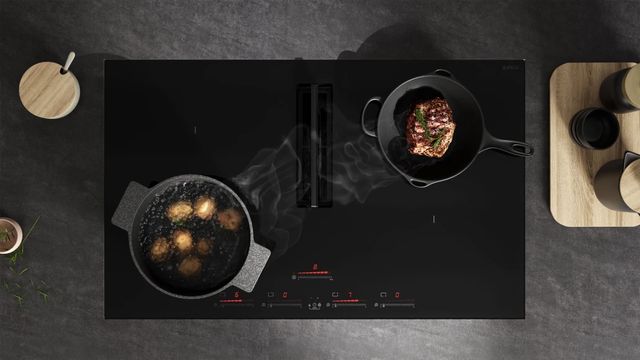
A downdraft cooktop pulls smoke and odors down through an extraction slot built directly into the cooking surface instead of using an overhead hood. Choosing this integrated design clears your kitchen sightlines, but it completely changes how you manage the layout beneath your counters.
Instead of placing a canopy above, the blower sits inside the base cabinets, which dictates exactly how you map your storage and ducting. Fuel type alters the footprint too, forcing a decision between the flat surface of an induction unit and the heavy grates of a gas appliance. You will also need to match the unit's width and venting modes to the exhaust pathways your floor plan can handle.
We look at how extraction works at the counter level and what you need to prepare below it. The details below help you sort through base space requirements and ducting setups so you make the right choice for your home.
What to Expect From Your Downdraft Cooktop
Learn how integrated extraction changes your cabinet layout and which venting setup suits your kitchen.
Key Takeaways
- Cabinet adjustments: The blower mechanism occupies the space immediately below the counter, meaning you sacrifice standard top drawer storage.
- Venting pathways: You can route a downdraft cooktop outside through the floor or run it in recirculating mode if exterior ducting is impossible.
- Fuel differences: A gas unit uses sealed burners and iron grates, while induction models provide a smooth glass surface that wipes down quickly.
What Is a Downdraft Cooktop and How Does It Work?
Integrated ventilation pulls smoke and odors downward through a central channel built right into the appliance, skipping the need for an overhead canopy. This setup clears the view across an island or peninsula while managing the steam from daily meals.
Understanding Integrated Ventilation
A standard hood captures rapidly rising steam as it drifts upward, while a downward vent must fight gravity to pull air sideways and down. If you boil large pots of water frequently, you might notice some steam escaping, but the system easily handles standard daily searing and simmering.
The extraction method relies on a central vent channel placed between the heating areas. Models like the 36-inch JennAir downdraft cooktop use this built-in center slot to draw air away from all four cooking zones simultaneously.
Surface and Size Differences
The dimensions of your appliance dictate how much counter real estate you dedicate to cooking. A 30-inch frame fits easily into standard kitchen layouts, while stepping up to a 36-inch unit gives you more width to separate large skillets from simmering saucepans.
Fuel alters the physical footprint and your daily cleaning routine. The smooth glass surface of an induction model cools quickly and wipes clean without obstruction, while a 30-inch gas unit relies on sealed burners and grates that you must lift to clean underneath. Assess your cooking style to decide if pulling steam downward meets your ventilation needs.
Planning Your Cabinet and Duct Space
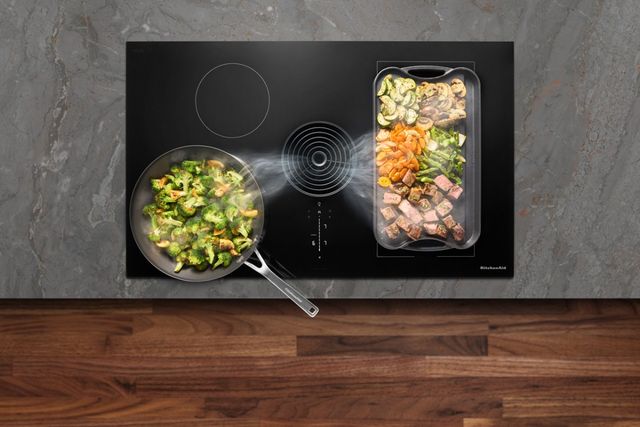
You lose the space immediately below your counter when you install this type of appliance. The blower mechanisms and internal ducting require significant clearance underneath the cooking surface to operate effectively. If your kitchen layout relies heavily on base storage, you must plan around the hardware that makes integrated venting work.
Even units designed to maximize space, like the 36-inch KitchenAid downdraft cooktop, still occupy standard drawer real estate. You cannot install shallow utensil drawers directly beneath the glass or the grates.
- Measure the depth: Every featured unit requires roughly 20 to 22 inches of depth inside the cabinet box.
- Plan the exhaust route: You must direct the air downward into the floor joists or back out through the toe kick area.
- Check the electrical supply: Confirm your existing wiring supports the heavy load of an induction unit or the lighter ignition requirements of a gas model.
Plan your base cabinets knowing the top drawer space will house the blower and ductwork.
Comparing Downdraft Cooktop Options
Comparing these four options reveals that every model here requires roughly 20 to 22 inches of depth, so cabinet clearance is not what decides this — fuel and width are.
| Decision Factor | 36" JennAir | 36" KitchenAid | 30" GE Profile | 36" Bertazzoni |
|---|---|---|---|---|
| Fuel Type | Induction | Induction | Gas | Induction |
| Width | 36 inches | 36 inches | 30 inches | 36 inches |
| Cooking Surface Material | Black glass | Black glass | Stainless steel and glass | Black glass |
| Venting Modes Supported | Ducted | Ducted or recirculating | Ducted | Ducted or recirculating |
| Control Type | Tap touch controls | Sliding touch controls | Knobs | Touch-through-glass |
| Notable Cooking Features | Flex-Choice XL flex zone | Assisted cooking presets | Sealed cooktop burners | 9 power levels plus booster |
| Best suited to | Flexible pan placement | Guided cooking routines | Traditional gas habits | Granular heat management |
Do You Have to Vent a Downdraft Cooktop Outside?
You can avoid running ductwork outside by choosing a model that offers a recirculating kit to filter the air and return it directly to the kitchen. Standard installations push the exhaust through external pathways, requiring you to map a route through the floor or an exterior wall. If you are placing the appliance on an island built over a concrete slab, external routing often becomes impossible.
| Venting Modes Supported | Found on | What you notice |
|---|---|---|
| Recirculating Option | 36-inch KitchenAid, 36-inch Bertazzoni | Filters air without exterior ducts |
| Gas Fuel | 30-inch GE Profile | Sealed burners contain spills |
A recirculating filter catches grease and odors before pushing the cleaned air back into the room, doing what a duct does without the structural demands. The 36-inch Bertazzoni downdraft cooktop and the 36-inch KitchenAid explicitly support filtering setups for these tricky floor plans. Choose a model that supports recirculating installation if exterior ducting is impossible, and remember that these setups require regular filter maintenance.
Choosing Between Induction and Gas Downdraft
Fuel type alters both the look of your counters and how quickly you clean up after a meal. A gas downdraft cooktop provides the visual feedback of an open flame and matches existing utility hookups in older homes. The 30-inch GE Profile gas unit focuses on sealed burners to contain spills before they run down into the internal hardware.
Magnetic currents heat the pan rather than the glass, which stops accidental spills from baking onto the surface near the central vent. The flat design of the 36-inch induction options wipes down effortlessly compared to the heavy metal grates of a gas unit. The 36-inch JennAir and KitchenAid also feature bridge elements that connect separate zones for oversized cookware. Select induction for a sleeker surface or gas if you prefer visible flames, matching your existing utility hookups.
Searing Meat on a Weekend
When you place a heavy cast iron skillet across a bridge element, the joined zones heat the entire pan evenly. You pull the heavy grease smoke straight down into the vent before it escapes into the room.
Comparing the fuel types reveals distinct benefits and drawbacks for your kitchen.
Induction: Pros
Smooth surface:
The flat black glass wipes clean quickly after a meal.
Cooler operation:
Magnetic fields heat the cookware directly, keeping the surrounding glass cooler.
Flexible heating:
Bridge elements link separate zones together to accommodate large griddles.
Induction: Cons
Heavy electrical demands:
You need dedicated high-amperage wiring to support the magnetic coils.
Cookware limits:
You must use magnetic stainless steel or cast iron pots and pans.
Visual learning curve:
You rely on digital indicators rather than an open flame to gauge heat levels.
Gas: Pros
Immediate visual feedback:
The open flame shows you exactly how much heat reaches the pan.
Utility matching:
You can drop the unit directly into homes already plumbed with gas lines.
Familiar routines:
You turn mechanical knobs and cook with the traditional methods you already know.
Gas: Cons
Slower cleanup:
You must remove heavy iron grates to wipe down the surface beneath them.
Baked-on spills:
The radiant heat bakes dropped food onto the metal around the burners.
Ducting limits:
Island installations require routing the exhaust duct down through the floor or toe kick.
Top Downdraft Cooktops for Your Kitchen
Finding the exact fit comes down to evaluating extraction power against your cabinet constraints. Sargent Appliance stocks these models to suit different installation requirements.
JennAir NextGen 36" Black Induction Cooktop
Shop JennAir Induction Cooktop
Best for: cooks who frequently use oversized griddles and roasting pans.
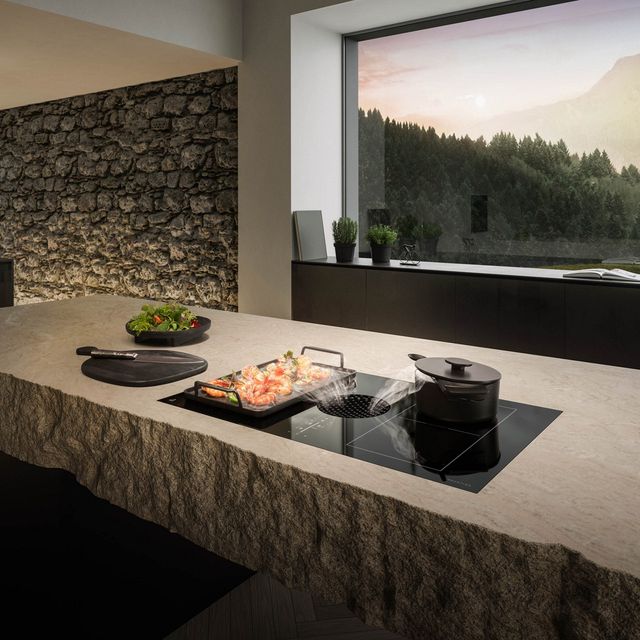
As the top choice for flexible cooking zones, this unit adapts to your largest cookware. If you compare it to the 36-inch Bertazzoni, you gain the Flex-Choice XL flex zone for automatic bridging, though it requires a full 36 inches of counter width. You get Quiet Ventilation Technology that manages smoke without drowning out conversations. The tap touch controls sit at the front, keeping your interface clean and accessible.
Top Features
- ADA Compliant: The front-placed controls keep operation accessible without reaching over hot surfaces.
- Quiet Ventilation Technology: You run the fan on high without overwhelming the room with motor noise.
- Flex-Choice: The system automatically bridges separate heating areas when it senses a large pan.
KitchenAid NextGen 36" Black Induction Downdraft Cooktop with Bridge XL Even-Heat™ Zone
Shop KitchenAid Induction Cooktop
Best for: homes that lack exterior venting access for an island setup.
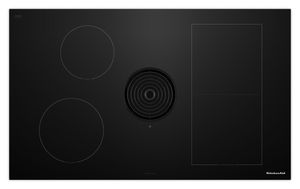
When your floor plan prevents outside ducting, this model serves as the top choice for assisted cooking presets. It trades the bridge elements of the 36-inch JennAir for guided cooking routines, though it requires a recirculating kit for a ductless setup. You navigate the four versatile cooking zones using sliding touch-activated controls. The ENERGY STAR certification reflects its efficient power management.
Top Features
- Bridge XL Even-Heat Zone: The joined elements distribute heat evenly across long roasting pans.
- Assisted Cooking Presets: You select programmed settings that manage the heat levels for you.
- Sliding Touch-Activated Controls: You drag a finger across the glass to adjust the temperature quickly.
GE Profile 30" Stainless Steel Built-In Gas Downdraft Cooktop
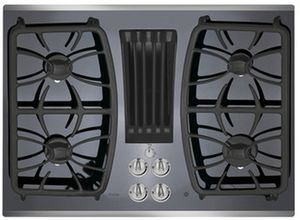
Best for: kitchens with narrow 30-inch cabinet cutouts and existing gas lines.
This unit acts as the top choice for traditional gas cooking in a smaller footprint. It relies on heavy grates instead of the flat continuous glass surface of the 36-inch KitchenAid. You sacrifice six inches of width but gain sealed cooktop burners that make cleaning quick and easy. The stainless steel finish matches traditional appliance suites perfectly.
Top Features
- Sealed cooktop burners: The solid bases stop spilled liquids from dripping into the internal mechanisms.
- Gas on Glass Cooktop: The surface beneath the grates wipes down faster than traditional stamped metal.
- ADA compliant: The layout allows accessible operation for users with limited reach.
Bertazzoni Professional Series 36" Black Glass Induction Cooktop
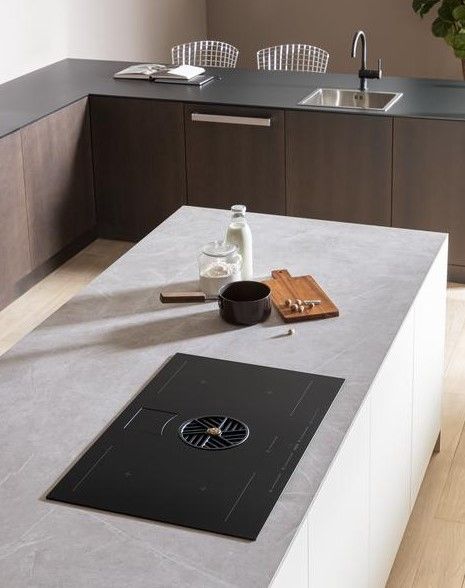
Shop Bertazzoni Induction Cooktop
Best for: cooks who demand exact power levels for delicate simmering.
The 9 power levels plus a booster make this the top choice for granular power control. It requires regular filter regeneration for a ductless mode, but it matches the 36-inch KitchenAid by supporting recirculating setups. You manage the four cooking zones through touch-through-glass digital controls that leave no crevices for grease to hide. The integrated hood moves up to 400 CFM of air to clear smoke rapidly.
Top Features
- Touch-Through-Glass Digital Controls: You tap the flat surface to change settings without twisting physical knobs.
- Regenerable Filters: You refresh the filter media instead of replacing it constantly.
- Bridge Element: You link adjacent zones to heat oversized cookware evenly.
Selecting the Right Downdraft Cooktop for Your Home
Choosing between these models comes down to matching the extraction power with your available base cabinet room. A smooth induction surface clears your sightlines and speeds up your cleaning routine, while a gas model keeps you cooking with familiar open flames. Once you map your internal ducting route, the choice gets much clearer.
Measure your cabinet space and verify your electrical or gas connections before making a final decision. Sargent Appliance stocks these downdraft cooktops to help you complete your kitchen upgrade.
Frequently Asked Questions About Downdraft Cooktops
A downward system handles standard daily cooking effectively by drawing air sideways. It captures less rapidly rising steam than an overhead canopy.
Yes, installing this fuel type in an island setup works perfectly. You must route the exhaust duct down through the floor or out through the toe kick.
The blower and internal ducting typically occupy the space directly below the unit. This configuration removes the option for standard top drawers.
They require careful planning for the exhaust route and base cabinet clearance. You must hire a licensed professional to manage the electrical or gas connections.
You can swap the units if your base cabinets accommodate the internal blower mechanisms. You must confirm your existing electrical circuit supports the high-amperage requirements.
They require ductwork routed downward through the floor or base cabinets. If external venting proves impossible, you can use a recirculating kit.
Why Trust Sargent Appliance
Founded in 1954, Sargent Appliance is a third-generation, family-owned business proudly serving Michigan for over 70 years. With showrooms in Rochester, Macomb, and Clinton Township, the company offers a wide selection of premium kitchen, laundry, and home appliances from leading brands — most in stock or available within days.
Sargent Appliance delivers an exceptional shopping experience both in-store and online. Customers enjoy personalized service from manufacturer-trained experts, hands-on kitchen vignette displays, professional delivery and installation, and comprehensive support for homeowners, builders, and designers. Guided by the motto “Big enough to compete, small enough to care,” Sargent is built on a foundation of integrity, expertise, and outstanding customer service.
Shop Downdraft Cooktops Sargent Appliance
Visit one of our showrooms to see the Sargent difference — from live kitchen vignettes to expert guidance on the latest appliances. Prefer to shop from home? find premium refrigerators, ranges, dishwashers, and more designed for style, performance, and everyday convenience. Need help? Our knowledgeable team is ready to assist you in finding the best downdraft cooktop for your kitchen — just call 586-791-0560, start a chat online, or visit us in person.